 Drying Technology

Keywords: activatedsludgesewagetreatment sewagesludgedewatering
Due to the high output, high moisture content and huge volume of sludge in the increasingly large-scale sewage treatment plant, it is not only inconvenient in the process of storage, transportation, loading and unloading, but also has high potential environmental safety risks and hidden dangers. The cost of sludge disposal in some developed countries accounts for 40% ~ 60% of the total cost of sewage treatment plants, and some even reach 65%. The average disposal and transportation fee in European countries is about 470 ± 280 euros per ton. In 2016, the average disposal cost of enterprise sludge in China was basically 1500 ~ 6000 yuan per ton (of which the transportation cost accounted for about 5% ~ 15%), and it is still under great pressure of price rise. According to the data, the annual output of sludge in China in 2015 was 33.59 million tons (with a moisture content of 80%). In view of the mature sewage biochemical treatment technology, low cost and many other advantages, 90% of the sludge in the world is produced at present.#sludgedewatering anddrying
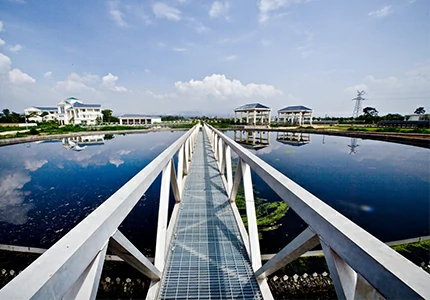
Activated sludge process is adopted in sewage treatment plants, and the sludge output is still growing rapidly every year.
The initial sludge moisture content is generally 96% ~ 99.8%. After mechanical dehydration, the moisture content is reduced to about 80%. It is difficult to further remove water for quality reduction, so sludge drying treatment is required. Sludge drying generally adopts thermal evaporation to reduce the water content to a low level. It is composed of oil pool bottom sludge, air flotation machine scum, residual activated sludge and chemical sludge of other process units.
Sludge is a kind of solid waste. If it has the characteristics of acute toxicity, flammability, reactivity, corrosivity, leaching toxicity and infectious disease, it is a hazardous waste. According to the environmental protection priority clause of the environmental protection law, the solid waste produced by factories and mining enterprises is treated as hazardous waste before being identified, while the sludge of factories and mining enterprises in China basically belongs to hazardous waste because it contains various toxic chemicals or heavy metals.
Sludge drying has the risk of combustion and explosion. When the sludge drying system is affected by many types of heat sources, such as sludge drying, explosion, etc., it is easy to cause a large number of types of sludge, sludge drying and so on.
According to the final target moisture content, it can be divided into "semi drying" and "full drying". The moisture content of semi drying sludge is 30% ~ 50% and that of full drying is less than 30%. The safety of the drying system depends on the target moisture content, which is a prerequisite for the sludge drying process, so the more dry the sludge is, the more dangerous it is. In order to achieve the dual purposes of water removal and reduction and production safety, technical measures such as semi drying, low-temperature drying, nitrogen protection, temperature and oxygen content instrument interlocking control are often used to improve the safety of the sludge drying device.
Hot water drying method is to use the heat energy of high-temperature hot water for heat exchange through the heat exchanger to evaporate the water in the sludge and dry the sludge. The sludge drying with this heat source is generally indirect drying, and the requirements for heat exchanger are higher. Many factories and mining enterprises have heating furnaces or steam powered devices to produce steam condensate (high-temperature hot water) or high-temperature cooling water and other by-products, such as thermal power plants, smelters or oil refineries. Therefore, this heat source can be obtained from local materials, easy to obtain, high quality and low price (less than 1 / 3 of the price of steam), and can also realize comprehensive recycling. It is a very ideal heat source. Therefore, the "plate and frame pressure filtration hot water vacuum drying technology" developed by Germany in recent years is a typical representative of hot water drying technology. At present, it has been successfully applied in Nanjing Shengke water Co., Ltd. and Shanghai Jiading Xincheng sewage treatment company with good results.
Steam drying method is to use steam heat energy for heat exchange through the shell of heat exchanger to evaporate the water in sludge and dry it. According to different structures or internal components, sludge dryer with steam as heat source can be divided into disc dryer, paddle dryer, turbine dryer and other forms. The steam of factories and mining enterprises is widely used, easy to obtain, and the public engineering conditions are loose and convenient, especially in thermal power plants, smelters or oil refineries. Therefore, this kind of heat source can be obtained locally and can also realize comprehensive recycling. It is a very ideal clean heat source. General use 1.0
MPa, 160 ~ 230 ℃ low-pressure steam, due to the advantages of high steam drying
efficiency, large operation flexibility, easy control and good stability, coupled with the high efficiency and low energy consumption of the new steam sludge dryer, the imported complete set of equipment and instruments can realize unattended continuous operation (the price of imported equipment is also more than three times higher than that of domestic equipment), so it is widely used at present.